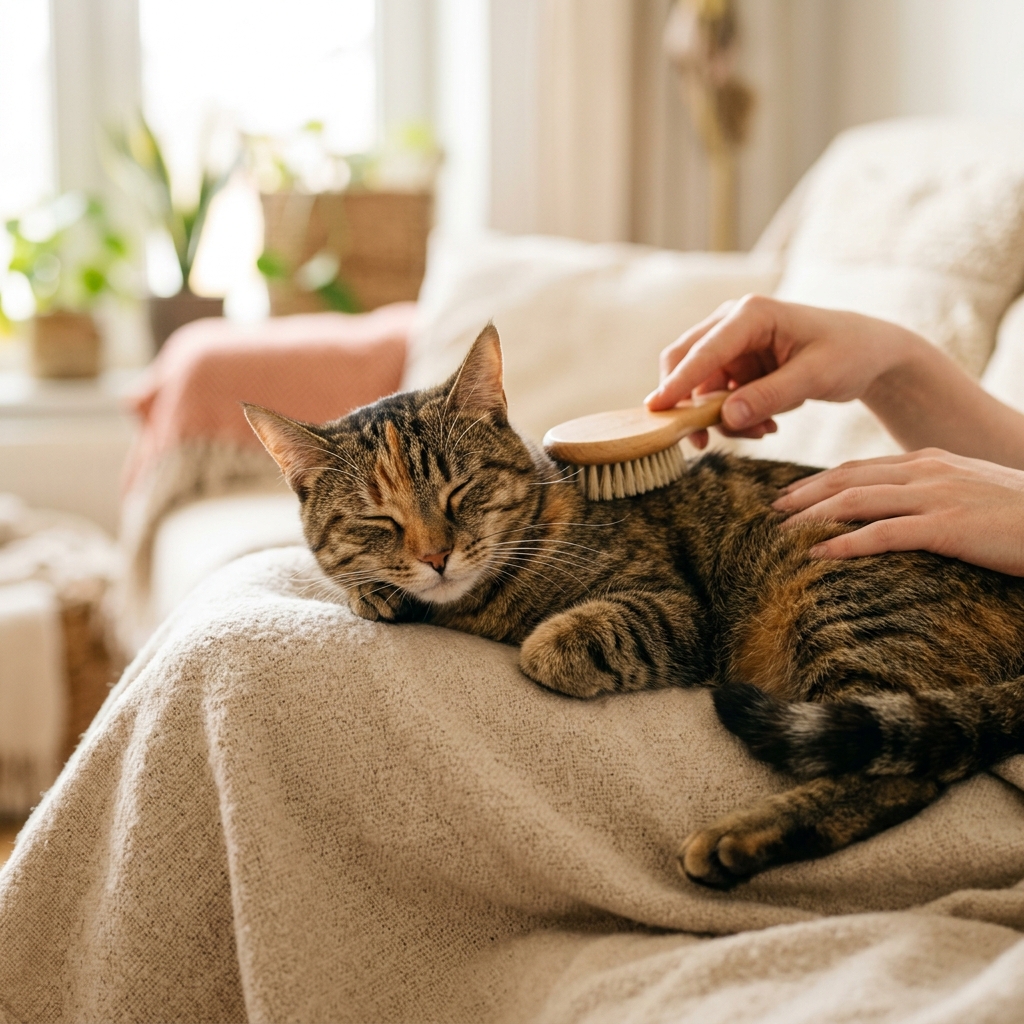
Cats groom themselves constantly — but that doesn't mean they need nothing from you. Here's what actually helps, by coat type, and when self-grooming becomes a problem.
Cats spend a significant part of their day grooming themselves, which leads many owners to assume they don't need any help at all. That's only partly true. Self-grooming handles a lot, but it doesn't prevent mats, doesn't manage hairballs well in every cat, and won't trim a single nail.
The right level of involvement depends heavily on coat type — a short-haired cat and a Persian have very different needs. Here's what actually matters, broken down by coat and by task, plus how to tell when self-grooming has tipped into a problem worth watching.
Why Cats Still Need Your Help
How Often, By Coat Type
Most cats never need a bath at all — brushing is where the real maintenance happens.
| Coat type | Brushing | Bathing | Example breeds |
|---|---|---|---|
| Short coat | 1–2x / week | Rarely needed | Domestic shorthair, Siamese |
| Long/silky coat | Daily | Every 4–6 weeks | Persian, Maine Coon, Ragdoll |
Most cats are excellent self-bathers and don't need water baths unless they get into something genuinely dirty, have a skin condition, or can't reach certain areas due to age or weight. Bathing too often can dry out skin and disrupt natural oils.
Caring for Short-Haired Cats
- Use a rubber grooming glove or soft bristle brush. A weekly session removes loose fur before your cat swallows it during self-grooming.
- Increase brushing during seasonal shedding. Even short coats shed noticeably more in spring and around major weather shifts.
- Keep sessions short and low-pressure. A 5-minute brush a cat enjoys beats a longer one they tolerate reluctantly.
Caring for Long-Haired Cats
- Daily brushing is genuinely necessary, not optional. Long coats mat within days if skipped, especially around the belly, armpits, and behind the ears.
- Use a metal comb for the mat-prone areas. A slicker brush works for the body, but a comb catches tangles the brush alone misses.
- Don't try to cut out a severe mat yourself. Skin underneath is closer than it looks — a groomer or vet can remove it safely with clippers.
- Wipe the face daily for flat-faced breeds. Persians and similar breeds are prone to tear staining and benefit from a daily gentle wipe.
Beyond the Coat: Nails, Ears & Teeth
These are the parts self-grooming never covers — and the ones owners skip most.
When Self-Grooming Becomes a Problem
Self-grooming is normal and healthy — but certain patterns are worth paying attention to.
Frequently Asked Questions
The questions cat owners ask most about grooming.
Do indoor cats really need regular grooming if they're already so clean?
Yes — being indoors doesn't reduce shedding or mat risk, and indoor cats are often less active, which can mean slightly less effective self-grooming reach over time, especially as they age. Regular brushing also reduces the amount of loose fur in the home and lowers hairball frequency, which matters just as much for an indoor cat as an outdoor one. The main difference indoors is usually lower dirt exposure, not lower grooming need overall.
My cat hates being brushed. Is there a way to make this easier?
Short, frequent sessions tend to work far better than longer occasional ones — a couple of minutes daily is often more tolerable than a ten-minute session once a week. Pairing brushing with something your cat already enjoys, like a favourite treat or a calm moment after a meal, helps build a more positive association over time. Starting in low-mat areas first and saving sensitive spots like the belly for once your cat is relaxed also makes a noticeable difference.
How do I trim my cat's nails without getting scratched?
Choosing a calm moment — often right after a nap or meal when your cat is naturally relaxed — makes a real difference, rather than attempting it when they're alert and playful. Gently pressing the paw pad extends the claw, and trimming just the sharp tip while avoiding the pink quick keeps it comfortable and reduces resistance. If your cat is consistently difficult, a groomer or vet can do this safely, and it's a completely reasonable option rather than a sign of failure.
Are hairballs normal, or a sign something's wrong?
Occasional hairballs, especially in long-haired cats or during heavy shedding periods, are a normal part of self-grooming and not usually a concern on their own. Frequent hairballs — more than roughly one a month — are worth paying attention to, since they can point to insufficient brushing, excessive shedding, or in some cases an underlying digestive issue. If hairballs come with vomiting beyond the hairball itself, appetite changes, or lethargy, that combination is worth a vet visit rather than home management alone.
Can I use a dog shampoo or human shampoo on my cat if needed?
No — cat skin has a different pH balance than both human and dog skin, and products formulated for either can cause dryness, irritation, or in some cases toxicity depending on the ingredients. This is especially important with anything containing essential oils or certain insecticides common in dog products, some of which are dangerous for cats specifically. If your cat genuinely needs a bath, a cat-specific shampoo is the only safe choice, and your vet can recommend a medicated option if there's an underlying skin issue.
Gully Tails Editorial
The Gully Tails team brings you expert-reviewed guides and practical advice for pet parents in India.