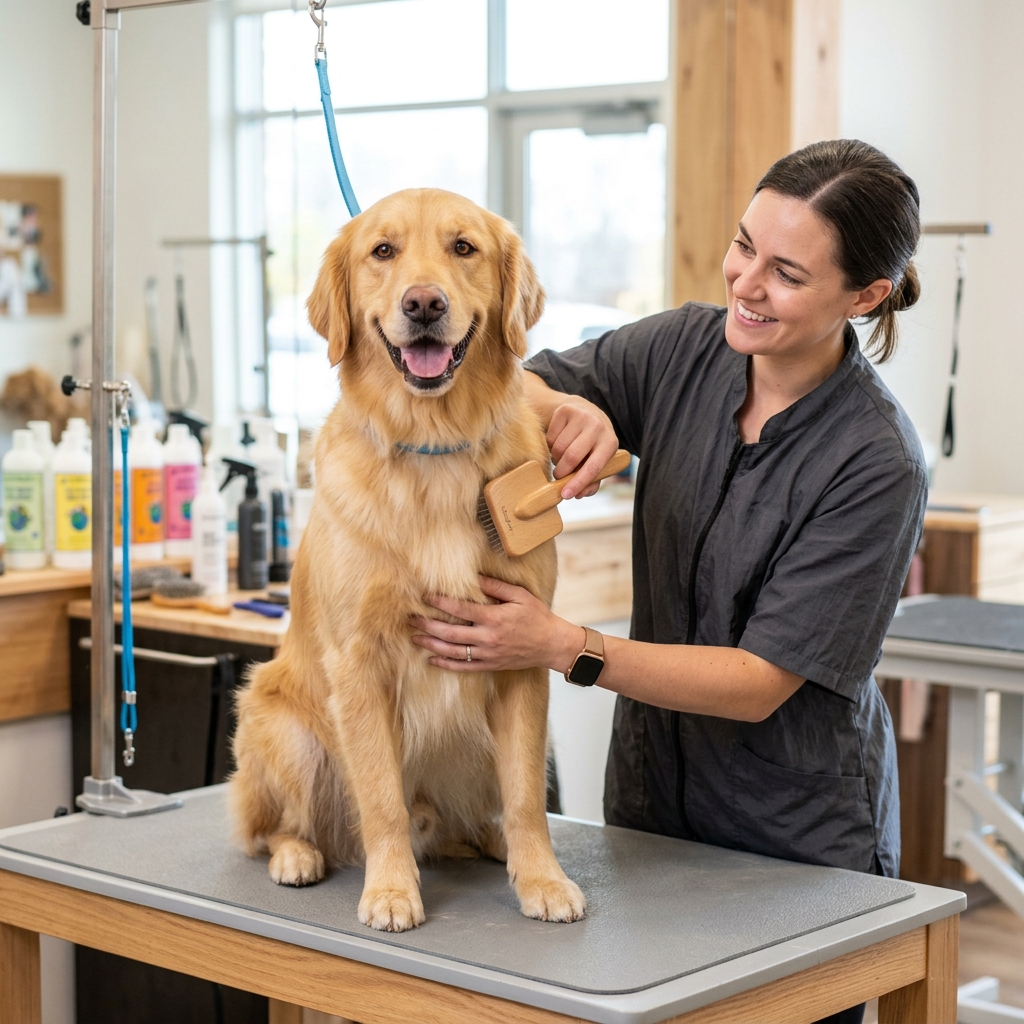
From bathing frequency to nail trims most owners avoid, here's a coat-by-coat breakdown of what your dog actually needs — and how often.
Grooming isn't just about keeping your dog looking neat — it's one of the most overlooked parts of preventive health care. Matted fur hides skin infections, overgrown nails change how a dog walks, and ignored ears are one of the most common reasons dogs end up at the vet.
The right routine isn't one-size-fits-all though. A short-haired Labrador and a double-coated Spitz need genuinely different grooming approaches. Here's what actually matters, broken down by coat type and by task.
Why Grooming Is More Than Cosmetic
How Often, By Coat Type
Frequency is the question owners get wrong most — both over-bathing and under-brushing cause real problems.
| Coat type | Brushing | Bathing | Example breeds |
|---|---|---|---|
| Short coat | 1–2x / week | Every 4–6 weeks | Labrador, Beagle, Boxer |
| Double coat | 3–4x / week | Every 6–8 weeks | Spitz, Husky, Golden Retriever |
| Long/silky coat | Daily | Every 3–4 weeks | Shih Tzu, Lhasa Apso, Cocker Spaniel |
| Curly/wiry coat | 2–3x / week | Every 4–6 weeks | Poodle mixes, Terriers |
Over-bathing strips natural skin oils and can actually cause more itching and dryness, not less. Stick to the range for your coat type unless your vet advises otherwise for a skin condition.
Caring for Short-Coated Dogs
- Use a rubber curry brush or grooming mitt. Short coats shed plenty despite looking low-maintenance, and these tools lift loose hair effectively.
- Don't skip brushing just because there's "nothing to detangle." Regular brushing still reduces shedding around the house and distributes natural oils.
- Check skin folds in wrinkled breeds. Boxers, Bulldogs, and similar breeds need folds wiped and dried to prevent fungal or bacterial buildup.
Caring for Double-Coated Dogs
- Use an undercoat rake during seasonal shedding. The dense undercoat sheds heavily twice a year and needs a tool designed to reach it.
- Never shave a double coat. It regulates temperature in both heat and cold — shaving disrupts that and can cause uneven, damaged regrowth.
- Brush before bathing, not just after. A matted double coat traps water against the skin, which can lead to hot spots if not dried fully.
Caring for Long-Coated Dogs
- Daily brushing isn't optional here. Long coats mat quickly, especially behind ears, under arms, and around the collar area.
- Use a slicker brush followed by a metal comb. The slicker handles surface tangles; the comb catches mats the slicker misses.
- Trim hair around the eyes regularly. Long fur falling into the eyes can cause irritation and staining over time.
Beyond the Coat: Nails, Ears & Teeth
These three get skipped most often — and they matter just as much as bathing and brushing.
Frequently Asked Questions
The questions dog owners ask most about grooming.
Can I groom my dog at home, or should I always use a professional?
Routine brushing, nail trims, and basic bathing are very manageable at home once you have the right tools and a calm approach, and many owners do this successfully for years. Professional groomers add real value for breed-specific cuts, de-matting severe tangles safely, and handling dogs that are anxious or resistant to nail trims. A reasonable approach for many owners is home care for routine maintenance, with a professional groomer every couple of months for a fuller groom.
My dog hates being brushed or bathed. What can I do?
Building tolerance gradually works far better than forcing a full session — short, calm sessions paired with treats and praise, slowly increasing duration over weeks, tend to shift a dog's association with grooming. Starting grooming routines early in puppyhood makes a significant difference, but older dogs can still learn to tolerate or even enjoy it with patient, consistent exposure. If resistance is extreme or paired with signs of pain, it's worth ruling out a physical cause with your vet first.
Is it okay to shave my dog's coat in summer to keep them cool?
For double-coated breeds specifically, shaving is generally not recommended since the coat insulates against both heat and sun, and shaving can lead to sunburn or uneven, damaged regrowth. For single-coated or curly-coated breeds, a shorter trim during summer is more reasonable and can help with comfort. The safer approach across coat types is usually a trim rather than a full shave, alongside the other summer cooling steps like shade, water, and avoiding peak-heat walks.
What human grooming products are unsafe to use on dogs?
Human shampoos and skin products are generally not suitable for dogs, since a dog's skin has a different pH balance and human products can cause dryness or irritation over repeated use. This applies to soaps, conditioners, and most skincare products, not just shampoo specifically. A dog-specific shampoo, ideally one suited to their coat type and any skin sensitivities, is the safer choice, with your vet able to recommend medicated options if your dog has a skin condition.
How do I know if my dog's nails are too long?
The clearest sign is hearing a clicking sound when your dog walks on hard flooring — by the time you can hear it, the nails are already past the ideal length. Visually, nails that curve and touch the ground when your dog is standing normally are too long and can affect posture and gait over time if left untrimmed. Regular trims every few weeks prevent the nail and the quick inside it from growing too long, which is what makes trims progressively harder the longer they're delayed.
Gully Tails Editorial
The Gully Tails team brings you expert-reviewed guides and practical advice for pet parents in India.