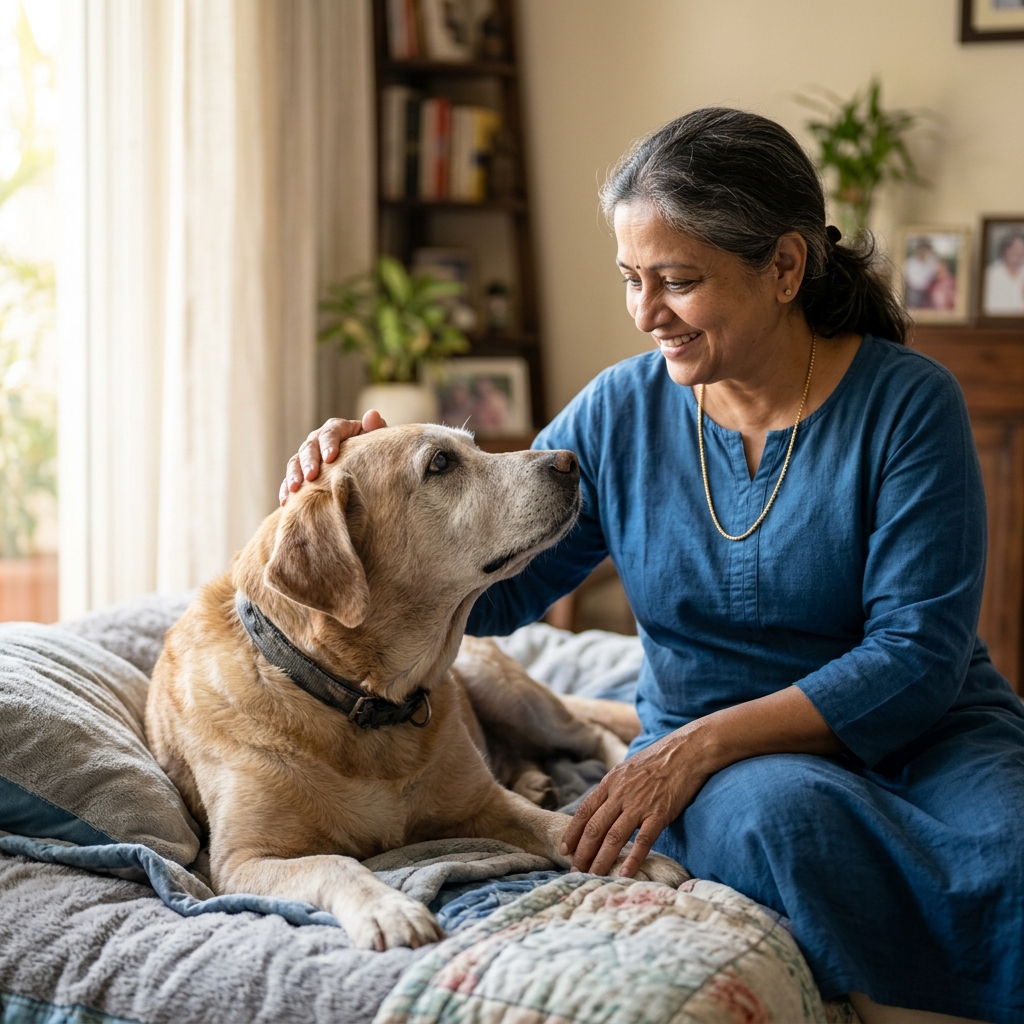
Seven is when things quietly start to shift. Here's what to expect as your dog enters their senior years — and how to stay ahead of it.
There's no dramatic moment when your dog becomes a senior. One day they're bounding up the stairs, the next they're taking them a little more slowly. It happens gradually — and that's exactly why it's easy to miss. The changes that begin around age 7 are real, they're significant, and they call for a different kind of care. Not more worry. Just more attention.
This guide covers what actually changes in your dog's body after 7, the conditions most likely to emerge, and the habits that make the difference between a dog who struggles and one who thrives in their later years.
“Ageing in dogs isn't a problem to solve — it's a phase to understand. The right care at the right time changes everything.”
1. When exactly is a dog "senior"?
Seven is the general marker — but breed size matters enormously. Larger breeds age faster and may be considered senior from age 5–6, while smaller breeds often don't show significant ageing signs until 8–9.
Rough guide by size: Giant breeds (Great Dane, Saint Bernard) — senior from 5–6 years. Large breeds (Labrador, German Shepherd, Golden Retriever) — senior from 6–7 years. Medium breeds (Beagle, Cocker Spaniel) — senior from 7–8 years. Small breeds (Shih Tzu, Pomeranian, Indie mixes) — senior from 8–10 years.
Whatever your dog's size, 7 is the age to start thinking and acting differently — even if they seem perfectly healthy. Most senior conditions are far easier to manage when caught before they become obvious.
2. The most common conditions in senior dogs
These are the conditions that show up most frequently in dogs over 7 in India — along with what to watch for and how to stay ahead of them.
Arthritis & Joint Disease
One of the most common and most underdiagnosed senior conditions
Arthritis is not just "slowing down with age." It is a progressive, painful condition where joint cartilage breaks down. Dogs don't whimper dramatically — they quietly adapt, and that adaptation is often mistaken for contentment.
Watch for
- Reluctance to climb stairs or jump
- Morning stiffness that eases with movement
- Slower, more cautious gait
- Irritability when joints are touched
- Reduced interest in walks or play
How to prevent
- Vet-prescribed pain management and anti-inflammatories
- Joint supplements — omega-3, glucosamine, chondroitin
- Orthopedic bed and ramp access to furniture
- Shorter, more frequent low-impact walks
Dental Disease
Affects over 80% of dogs by age 7 — largely unnoticed by owners
Dental disease isn't just about bad breath. Left untreated, bacteria from infected gums enter the bloodstream and damage the heart, kidneys, and liver. In senior dogs, it's one of the most impactful — and most preventable — conditions affecting overall health.
Watch for
- Persistent bad breath
- Drooling more than usual
- Reluctance to eat hard food or chew toys
- Pawing at mouth or face
- Visible tartar or red, swollen gums
How to prevent
- Annual professional dental cleaning under anaesthesia
- Daily or weekly toothbrushing with dog-safe toothpaste
- Dental chews and water additives approved by your vet
- Regular oral checks at every vet visit
Kidney, Liver & Heart Disease
Silent in early stages — bloodwork is the only reliable early detector
Organ function declines naturally with age. Kidney and liver disease often show no symptoms until 70–75% of function is already lost. Heart disease can progress quietly for years before a cough or exercise intolerance finally signals a problem. This is why biannual bloodwork from age 7 is non-negotiable, not optional.
Watch for
- Increased thirst and urination
- Unexplained weight loss
- Persistent cough or laboured breathing
- Reduced exercise tolerance
- Yellowing of eyes or gums (jaundice)
How to prevent
- Biannual bloodwork and urinalysis from age 7
- Kidney or cardiac-support diet if diagnosed
- Regular blood pressure monitoring
- Early medication when organ values begin to shift
Canine Cognitive Dysfunction (CCD)
The dog equivalent of dementia — more common than most owners realise
Canine Cognitive Dysfunction is a progressive neurological condition affecting memory, orientation, and behaviour in older dogs. It is frequently dismissed as "just old age" — but early diagnosis allows for interventions that meaningfully slow its progression.
Watch for
- Getting lost in familiar spaces
- Forgetting learned commands or house training
- Disturbed sleep — restless at night, sleeping more by day
- Staring blankly at walls
- Increased anxiety or withdrawal
How to prevent
- Early vet diagnosis using cognitive assessment tools
- Mental enrichment — puzzle feeders, scent games, gentle training
- Consistent daily routine — reduces disorientation
- Prescribed medications or supplements where appropriate
3. Diet — what needs to change at 7
Your dog's nutritional needs shift meaningfully in their senior years. The same food that served them well at 3 may not be right at 8.
- Fewer calories, same satisfaction — Metabolism slows with age. Senior dogs who eat the same portions as before often gain weight, which accelerates joint disease and increases cardiac load.
- Higher-quality, easily digestible protein — Senior dogs absorb protein less efficiently. Higher-quality sources matter more, not less.
- Joint-supporting nutrients — Omega-3 fatty acids (fish oil), glucosamine, and chondroitin all support cartilage health. Many senior-specific dog foods include these.
- Increased hydration — Senior dogs are more prone to dehydration and kidney stress. Wet food or food toppers can increase fluid intake.
- Transition slowly — Any diet change should happen over 7–10 days to avoid gastrointestinal upset. Consult your vet before making significant changes.
4. Exercise — less isn't always better
It's tempting to pull back on exercise when your dog starts slowing down. Resist that instinct. Regular, appropriate movement keeps joints mobile, weight managed, and the mind engaged. The key word is *appropriate*.
- Shorter, more frequent walks rather than one long demanding one
- Swimming — ideal for dogs with joint pain, near-zero impact
- Sniff walks — let your dog set the pace and follow their nose
- Avoid high-impact activities — jumping, rough play, long runs on hard surfaces
- Watch for signs of fatigue mid-walk and cut it short if needed
5. Vet visits — twice a year, not once
This is the single most important shift for senior dog parents. Annual vet visits are designed for younger, healthier dogs. A senior dog can develop kidney disease, diabetes, or a heart condition in the span of six months — and show no external signs until it's advanced.
From age 7, your dog needs: a full physical examination every 6 months, annual bloodwork and urinalysis, blood pressure checks, dental assessment, and a body condition score to track weight changes. Some conditions caught on bloodwork at Stage 1 are entirely manageable. Caught at Stage 3, the options narrow significantly.
6. Red flags that always need same-day vet attention
Sudden collapse or extreme weakness — Could indicate cardiac event, severe anaemia, or internal bleeding. Do not wait.
Difficulty breathing or persistent cough — May signal heart failure or fluid accumulation. Requires urgent assessment.
Seizures — New-onset seizures in a senior dog need immediate investigation.
Sudden blindness or disorientation — May indicate hypertension, neurological event, or rapidly progressing CCD.
Not eating for more than 48 hours — Especially combined with lethargy or vomiting, this warrants prompt vet attention.
7. Your senior dog care checklist
- Vet visit every 6 months — not once a year
- Annual bloodwork and urinalysis from age 7
- Dental cleaning assessed annually
- Core vaccinations and parasite prevention kept current
- Switched to senior-appropriate diet with vet guidance
- Joint supplements discussed with your vet if appropriate
- Exercise routine adjusted — shorter, more frequent, low-impact
- Orthopedic bed and ramp or steps to reduce joint strain
- Mental enrichment built into daily routine
- Body weight monitored monthly — obesity accelerates every senior condition
The dogs who age the best aren't necessarily the luckiest ones. They're the ones whose people noticed early, adjusted thoughtfully, and kept showing up at the vet even when nothing seemed wrong. Seven isn't old. It's just a different chapter — and with the right care, it can be a very good one.
Frequently asked questions
Everything Indian dog parents ask about caring for ageing dogs.
When is a dog considered a senior in India?
Most dogs are considered senior from age 7, though this varies by breed and size. Large and giant breeds like German Shepherds and Labradors age faster and may be considered senior from age 5–6. Small breeds like Beagles or Shih Tzus may not show significant ageing signs until 8–9. Your vet can help assess where your dog sits on the ageing spectrum.
How often should I take my senior dog to the vet?
Senior dogs (7+) should visit the vet at least twice a year, even if they appear perfectly healthy. Twice-yearly check-ups allow early detection of kidney disease, arthritis, dental disease, thyroid issues, and cancer — all of which are significantly more manageable when caught early. Annual bloodwork and urinalysis are also recommended from age 7.
What are the signs of arthritis in older dogs?
Signs of arthritis in senior dogs include reluctance to climb stairs or jump, morning stiffness that eases with movement, slower or more cautious gait, limping, reduced activity and play interest, and sometimes irritability when touched around joints. If you notice these signs, consult your vet — arthritis is very manageable when treated early with the right combination of diet, exercise modification, and medication.
What should I feed my senior dog in India?
Senior dogs generally need food lower in calories to prevent weight gain, higher in easily digestible protein, and supplemented with joint-supporting nutrients like omega-3 fatty acids and glucosamine. Many Indian pet food brands now offer senior-specific formulas. Always transition to a new diet gradually over 7–10 days, and consult your vet before making significant changes.
What is canine cognitive dysfunction in dogs?
Canine Cognitive Dysfunction (CCD) is a neurological condition in older dogs similar to dementia in humans. Signs include disorientation at home, forgetting learned commands or house training, disrupted sleep cycles, increased anxiety, reduced interest in interaction, and staring blankly. It is progressive but manageable — early veterinary diagnosis allows for interventions that slow decline and improve quality of life.
Do senior dogs still need vaccinations?
Yes — senior dogs still need their core vaccinations including DHPPiL and rabies boosters. Your vet may reassess the schedule based on your dog's health status and lifestyle. Some senior dogs with chronic illness or compromised immunity may need a modified plan. Never skip vaccinations without consulting your vet.
How much exercise does a senior dog need?
Senior dogs still need regular exercise, but the type and intensity should shift. Shorter, more frequent walks are better than long demanding ones. Swimming is excellent for dogs with joint pain. Avoid high-impact activities like jumping or rough play. Monitor your dog during exercise for signs of fatigue or discomfort and adjust accordingly — the goal is movement, not exhaustion.
What health conditions are most common in senior dogs in India?
The most common conditions in senior dogs in India include arthritis and joint disease, dental disease, kidney and liver disease, heart disease, diabetes, hypothyroidism, cataracts, cancer, and canine cognitive dysfunction. Most are manageable or treatable when detected early through regular vet check-ups and biannual bloodwork.
24/7 Emergency Vets Near You
Gully Tails Editorial
The Gully Tails Editorial team works with local vets and pet parents to bring you the most accurate and up-to-date resources for pet care in India.