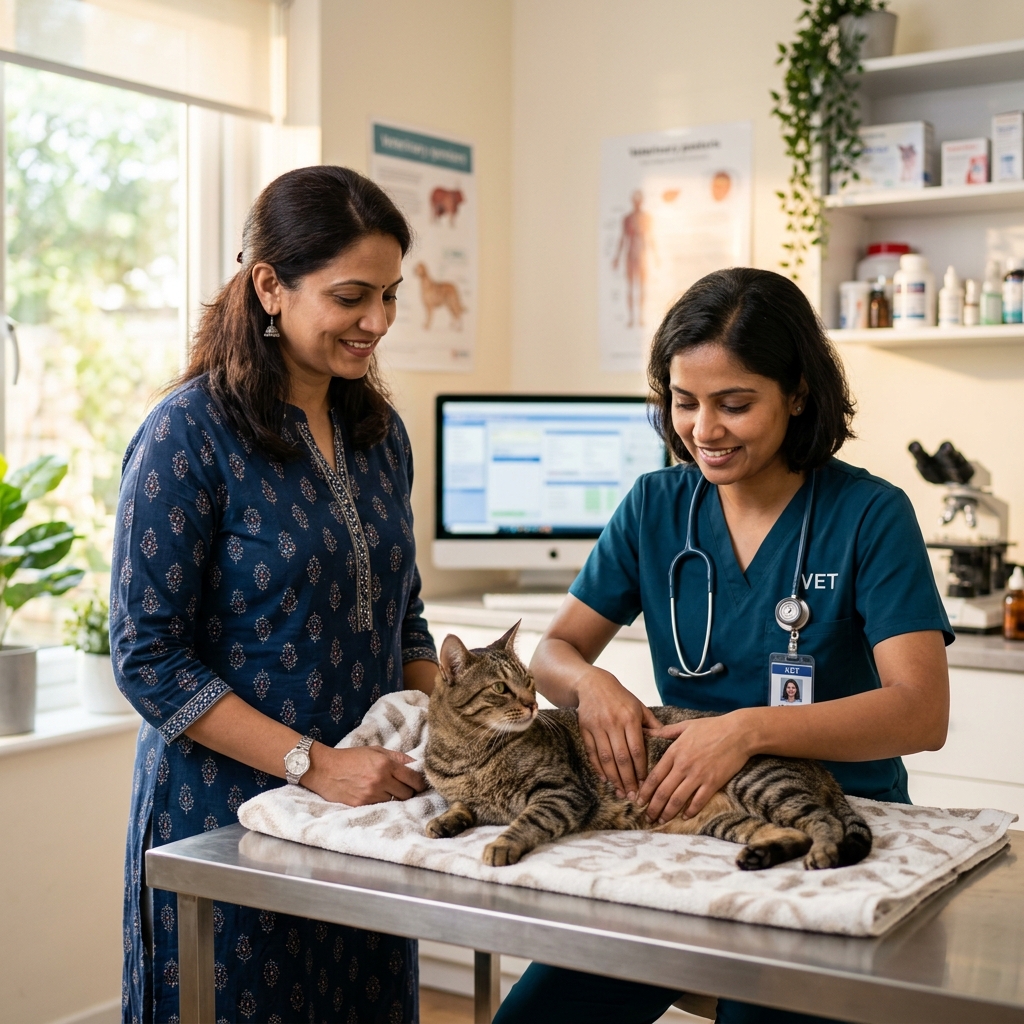
A practical guide for Indian cat parents on finding a trusted vet clinic — covering feline-friendly environments, low-stress handling, emergency availability, specialist services, and questions to ask.
Finding the right vet for your cat is one of the most important decisions you'll make as a cat parent — and one of the trickiest. Cats aren't small dogs. They stress differently, hide illness differently, and need a very different kind of clinic environment to feel even remotely okay about the whole ordeal. This guide helps you cut through the noise and find a clinic that genuinely works for your cat.
“The right vet for your cat isn't just medically capable — they know how to make a cat feel safe enough to actually be examined.”
1. Feline-friendly or cat-only — know the difference
This is the factor most cat parents don't think to ask about — and it matters more than almost anything else. A waiting room shared with dogs, full of barking and unfamiliar smells, triggers acute stress in cats before the vet has even said hello.
- Separate waiting areas for cats and dogs
- Quieter, calmer environment with reduced noise levels
- Pheromone diffusers (Feliway) to reduce feline anxiety
- Low, stable examination surfaces — not raised stainless steel tables
- Staff trained in low-stress, fear-free feline handling
Good to know: Cat-only clinics go a step further — no dogs on the premises at all. If your cat is particularly anxious or reactive, a cat-only clinic in cities like Bengaluru, Chennai, or Mumbai can make an enormous difference to how manageable vet visits actually are.
2. Location + emergency access
Start with proximity — but don't stop there. Identify a primary vet nearby and know your nearest 24/7 emergency clinic in advance. Cats can deteriorate quickly and quietly — urinary blockages, respiratory distress, and toxin ingestion leave very little time.
- 24/7 hours or a clear after-hours emergency contact
- On-call vet — not just a referral to another facility
- ICU or overnight monitoring for critical cases
3. In-house diagnostics and specialist access
Waiting two days for an external lab result can be dangerous. Prioritise clinics with in-house blood work, X-ray, and ultrasound. For complex feline conditions — kidney disease, heart issues, skin disorders, or suspected cancer — check if they have specialists or a clear referral network.
Good to know: Kidney disease, hyperthyroidism, and dental disease are among the most common conditions in cats over 7. A clinic with in-house diagnostics catches these earlier — and earlier always means better outcomes.
4. Vaccination, wellness & communication
A good clinic builds a proactive wellness plan — not just a one-time jab. And the vet who delivers it matters just as much as the plan itself. Look for someone who communicates in plain language and clearly has patience for both you and your cat.
- Customised vaccination schedule for your cat's age and lifestyle
- Digital health records and vaccination passport
- Vet explains diagnoses clearly without jargon
- Reachable via phone or WhatsApp for non-emergencies
- Follows up after procedures or sick visits
5. Red flags to walk away from
- No separate waiting area for cats — Sharing a space with dogs is avoidable stress. A good clinic has thought about this.
- Rough or impatient handling — Cats require patience and calm. Forceful restraint causes lasting fear of vet visits.
- Prescribing without examining — No physical check before medication is a serious shortcut, especially with cats who mask symptoms.
- Vague or surprise billing — A trustworthy clinic is upfront about costs before treatment begins.
- Discouraging second opinions — An ethical vet always supports your right to seek one.
6. Questions to ask on your first visit
- Do you have a separate waiting area or entry for cats?
- What low-stress or fear-free handling protocols do you follow?
- What's your after-hours emergency protocol?
- Which diagnostics do you handle in-house?
- Do you have specialist referrals for feline conditions?
7. Your quick comparison checklist
- Cat-only or feline-friendly environment with separate waiting area
- Reasonable distance for routine and emergency visits
- 24/7 or clear emergency referral available
- In-house diagnostics — bloodwork, X-ray, ultrasound
- Specialist access or referral network
- Digital health records maintained
- Vet communicates clearly and handles cats with patience
- Transparent pricing with no surprise charges
The right vet clinic for your cat is one that respects how cats actually work — anxious, perceptive, and entirely unimpressed by stainless steel. The clinic you choose today should be one you can grow with through kittenhood, adulthood, and your cat's senior years. Don't rush it. Your cat will notice the difference — even if they'd never admit it.
24/7 Emergency Vets Near You
Gully Tails Editorial
The Gully Tails Editorial team works with local vets and pet parents to bring you the most accurate and up-to-date resources for pet care in India.