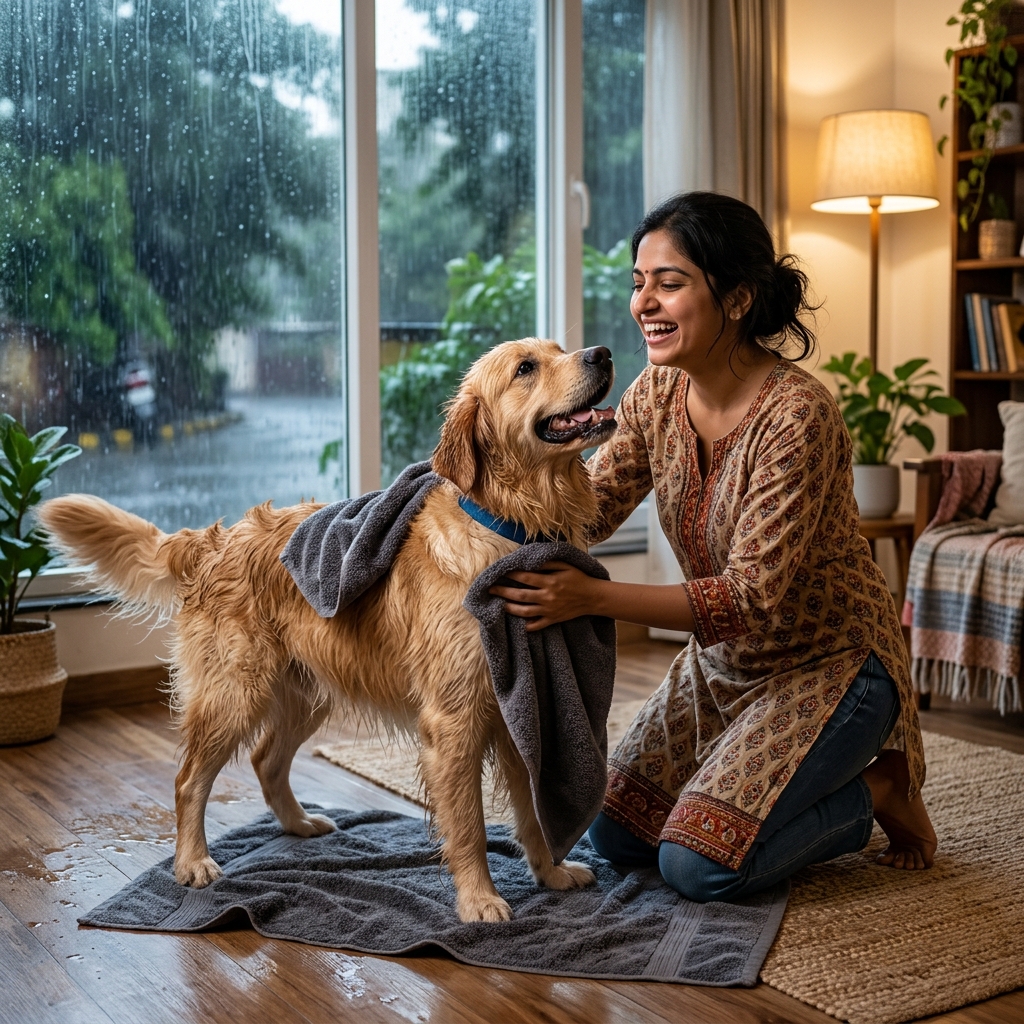
Monsoon brings real health risks for dogs and cats in India. Here's what to watch for and how to stay ahead of it.
The monsoon is many things — relief from the heat, the smell of wet earth, chai on the balcony. But for your pets, it brings a very specific set of health risks that ramp up every June and ease only in October. Waterlogged streets, humidity-soaked skin, and ticks thriving in the damp make this the season where a little prevention goes a very long way.
This guide covers the most common monsoon illnesses in dogs and cats in India — what to watch for, and what to do before they become a problem.
“Most monsoon illnesses in pets don't announce themselves loudly. They start quietly — a little less energy, a little less appetite. The earlier you catch it, the simpler the fix.”
1. Leptospirosis — the biggest monsoon threat
Leptospirosis
Waterborne bacterial infection
Leptospirosis spreads through water or soil contaminated with the urine of infected animals — rats in particular. Flooded streets and puddles in Indian cities are prime transmission sites. Dogs who walk through or drink from stagnant water are especially vulnerable.
Watch for
- Sudden high fever
- Lethargy and loss of appetite
- Vomiting and diarrhoea
- Yellow-tinged eyes or gums (jaundice)
- Reduced or no urination
How to prevent
- Keep leptospirosis vaccination up to date (part of DHPPiL)
- Avoid walks near flooded areas and puddles
- Use clean, fresh drinking water always
- Dry paws thoroughly after every outing
Zoonotic alert: Leptospirosis can spread from infected pets to humans. Wear gloves when handling a sick pet's urine or vomit and wash hands thoroughly. Seek vet care immediately if you suspect leptospirosis in your dog.
2. Tick & flea infestations — monsoon's most common nuisance
Tick & Flea Infestations
Parasitic infestation — peaks June to September
Ticks and fleas thrive in warm, humid conditions — exactly what the Indian monsoon delivers for four months straight. Beyond the discomfort of infestation, ticks carry serious secondary diseases: tick fever (ehrlichiosis, babesiosis) can cause severe anaemia and, if untreated, organ failure.
Watch for
- Excessive scratching or biting at skin
- Visible ticks — especially ears, paws, underbelly
- Pale gums (sign of anaemia from blood loss)
- Fever, lethargy, and loss of appetite
- Flea dirt (black specks) in the coat
How to prevent
- Start tick prevention before monsoon begins — spot-on, collar, or oral tablet
- Check for ticks daily after every walk
- Avoid tall grass and waterlogged areas on walks
- Treat your home environment if infestation is found
Tip: Never remove a tick by squeezing or burning it. Use fine-tipped tweezers, grip close to the skin, and pull straight out. Then consult your vet — the tick may need to be identified, and your pet may need a blood test if symptoms develop.
3. Fungal & bacterial skin infections — the hidden monsoon risk
Skin Infections — Fungal & Bacterial
Hot spots, ringworm, yeast infections, pododermatitis
High humidity, wet fur, and skin that never quite dries out create the perfect environment for fungi and bacteria to multiply. Dogs with skin folds, floppy ears, or thick double coats are especially prone. Cats, while more self-grooming, are not immune — particularly those with outdoor access.
Watch for
- Red, moist, or oozing patches on skin (hot spots)
- Circular, scaly patches — possible ringworm
- Persistent paw licking or chewing
- Musty or yeasty smell from coat or ears
- Head shaking or ear scratching (ear infections)
How to prevent
- Dry your pet thoroughly after every walk or bath — especially ears, paws, and skin folds
- Keep coat well-groomed and trimmed during monsoon
- Clean ears weekly with vet-recommended solution
- Use antifungal shampoo if advised by your vet
4. Other monsoon risks worth knowing
Beyond the big three, monsoon brings a few other conditions worth keeping on your radar:
- Gastrointestinal infections — Dogs drinking from puddles or eating contaminated food can develop sudden vomiting, diarrhoea, and dehydration. Keep fresh water available at all times and avoid street food scraps during this season.
- Respiratory infections — Cold, damp air can trigger upper respiratory infections in cats and dogs alike. Cats in particular are prone to herpesvirus flare-ups during stress or temperature changes. Watch for sneezing, nasal discharge, and coughing.
- Parvovirus outbreaks — Parvo spikes during monsoon as the virus thrives in wet soil and survives for months. Ensure your puppy's primary series and your adult dog's boosters are current before the season begins.
- Snake and insect bites — Monsoon drives snakes and insects closer to homes and walkways. Avoid dense vegetation during walks and inspect your pet after outdoor time, especially in suburban or semi-rural areas.
5. Your monsoon pet care checklist
Build these habits into your routine from the first week of June — they take minutes and save a great deal of worry:
- Vaccinations current — especially leptospirosis (DHPPiL for dogs) and core vaccines for cats
- Tick and flea prevention started before the season — consult your vet for the right product
- Dry your pet thoroughly after every outing — ears, paws, underbelly, and skin folds
- Check for ticks daily — especially after walks in parks or on grass
- Avoid walks near flooded streets, puddles, and stagnant water
- Clean ears weekly — dampness makes ear infections more likely
- Fresh, clean drinking water available at all times — replace regularly
- Keep indoor cats indoors during heavy rain and flooding
- Schedule a pre-monsoon vet check-up if you haven't already
- Know where your nearest 24/7 vet clinic is — emergencies happen after dark too
The monsoon doesn't have to be a stressful season for pet parents. A bit of preparation before the first rains, consistent daily habits through the season, and knowing when to call your vet turns most risks into non-events. Your pet is counting on you to notice the things they can't tell you about — and now you know what to look for.
Frequently asked questions
Everything Indian pet parents ask about keeping dogs and cats healthy during the rainy season.
What diseases do dogs get during monsoon in India?
Common monsoon diseases in dogs in India include leptospirosis (from contaminated floodwater), tick fever (ehrlichiosis and babesiosis), parvovirus outbreaks, fungal and bacterial skin infections, ear infections, and gastrointestinal infections from drinking stagnant water. Ticks and fleas also peak sharply during the monsoon months.
Is leptospirosis dangerous for dogs in India?
Yes — leptospirosis is one of the most serious monsoon risks for dogs in India. It spreads through water or soil contaminated with the urine of infected animals, especially in flooded urban areas. It can cause severe kidney and liver failure and is also transmissible to humans. Vaccination and avoiding floodwater are the primary preventive measures.
How do I protect my dog from ticks during monsoon?
Start vet-recommended tick prevention before monsoon begins — monthly spot-on treatments, tick collars, or oral tablets. Check your dog thoroughly after every walk, focusing on ears, paws, underbelly, and between toes. Avoid tall grass and stagnant water on walks. Consult your vet for the right product for your dog's weight and breed.
Can cats get leptospirosis during monsoon?
Cats are generally less susceptible to leptospirosis than dogs, but they can carry and transmit the bacteria. Cats with outdoor access or exposure to contaminated water carry higher risk. Keep outdoor cats indoors during heavy rain and flooding, and consult your vet if you notice any sudden lethargy, loss of appetite, or other unusual symptoms.
Why does my dog get skin infections during the rainy season?
The monsoon creates warm, humid conditions ideal for fungi and bacteria to thrive on the skin. Dogs that stay wet for extended periods — especially in skin folds, ears, and paws — are particularly vulnerable. Hot spots, ringworm, and yeast infections are common. Drying your dog thoroughly after every walk and keeping their coat well-groomed significantly reduces risk.
How do I keep my cat safe during monsoon?
Keep cats indoors during heavy rain and flooding. Dry them thoroughly if they get wet. Watch for respiratory infections, which can flare during cold, damp spells. Clean the litter box more frequently during this season — dampness increases bacterial growth. Monitor for skin irritation, unusual lethargy, or changes in appetite and consult your vet promptly if anything seems off.
What should I include in a monsoon pet care routine?
Key monsoon pet care habits: dry your pet thoroughly after every outing, check for ticks and fleas daily, keep ears clean and dry, avoid walks near stagnant or floodwater, ensure vaccinations are current (especially leptospirosis), use vet-recommended parasite prevention, and schedule a pre-monsoon vet check-up.
When should I take my pet to the vet during monsoon?
Seek vet attention promptly if your pet shows: sudden lethargy, loss of appetite, fever, vomiting or diarrhoea lasting more than 24 hours, yellow-tinged eyes or gums, excessive scratching or visible skin lesions, limping, or difficulty breathing. Monsoon illnesses can escalate quickly — don't wait for symptoms to worsen before calling your vet.
24/7 Emergency Vets Near You
Gully Tails Editorial
The Gully Tails Editorial team works with local vets and pet parents to bring you the most accurate and up-to-date resources for pet care in India.