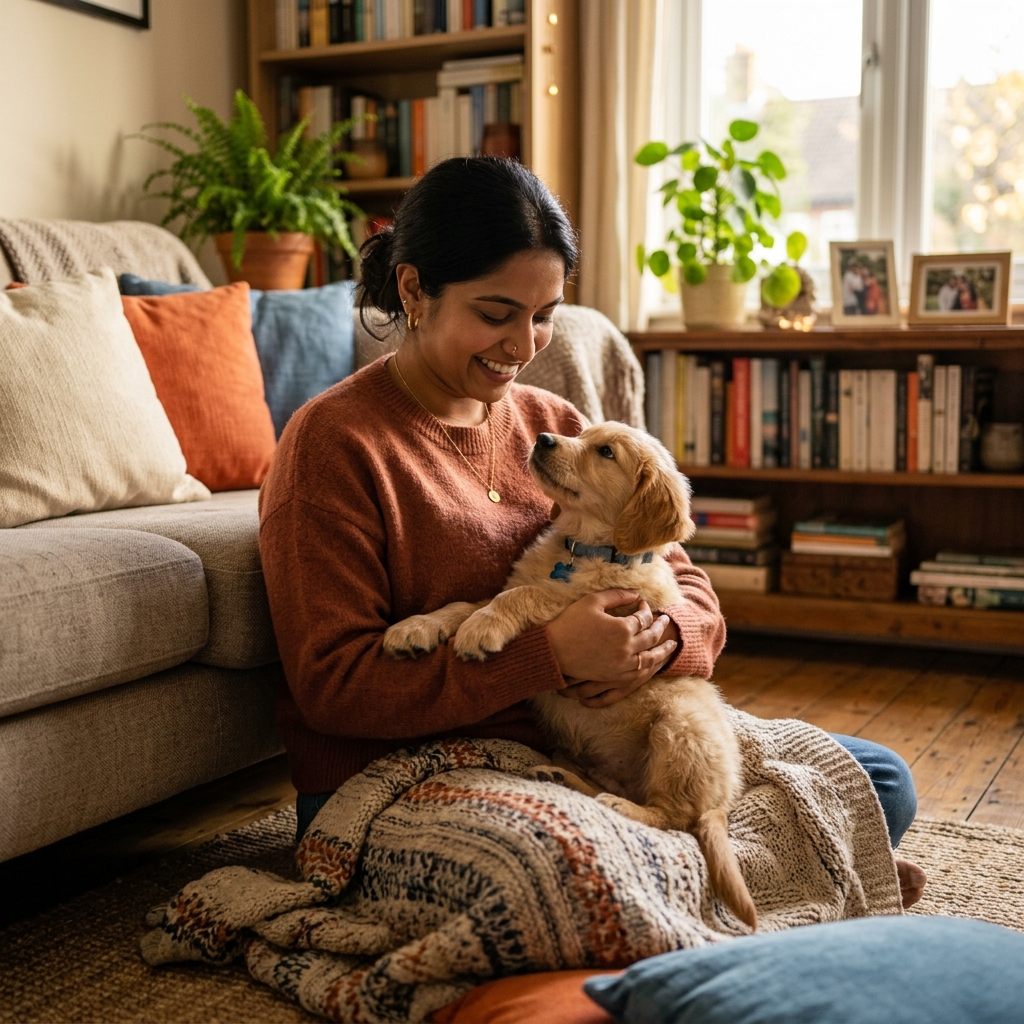
Not another supply checklist. The honest version of what the first few weeks with a dog actually feel like — and how to know what's normal.
Most first-time dog guides are really just shopping lists with a bow on top. Buy this bed, this leash, this brand of food — done. What they skip is the part that actually trips people up: the first two weeks, when nothing feels like it does in the videos, and you start quietly wondering if you've made a mistake.
You haven't. This guide covers the decision-making that matters before you bring a dog home, and — more importantly — what's genuinely normal once you do, so you're not Googling "is this normal" at 1 AM on day three.
First, a reassurance: Almost every first-time owner has a moment of doubt in the first week. It doesn't mean you're failing or that you got the wrong dog. It means you're adjusting to a real change — and so is your dog.
1. Before You Bring Them Home
A few honest questions worth answering before adoption day — not to talk you out of it, but to set the right expectations from day one.
Do You Genuinely Have the Time?
Not just walk-time — settling-in time. The first few weeks need more presence than the years after, especially for a puppy or a dog adjusting from a shelter. If your schedule is unpredictable right now, it's worth being honest about whether this is the right month, even if it's the right decision overall.
Have You Budgeted Past the Obvious Costs?
Food and a leash are the easy part. Vet visits, vaccinations, unexpected illness, and grooming add up in ways first-time owners often underestimate. A dog is a multi-year financial commitment, not a one-time purchase — it's worth looking at this honestly rather than optimistically.
Is Everyone at Home Actually on Board?
A dog affects everyone in the house — schedules, cleanliness expectations, who's home when. If one household member is enthusiastic and another is lukewarm, that gap tends to surface in the first hard week, not before. A real conversation now saves a harder one later.
Is Your Space Realistically Workable?
Apartment living, no yard, a busy road outside — none of these rule out dog ownership, but they do shape which dog is a good fit. A high-energy breed in a small flat with no walking routine is a recipe for frustration on both sides. Matching the dog to your actual life matters more than the dog's appearance.
2. The First Two Weeks: What's Actually Normal
This is the part most guides skip. If any of this happens, you haven't done anything wrong.
They Might Not Eat Much at First
A new home is overwhelming, and a drop in appetite for the first day or two is common, especially in adopted adult dogs. Keep offering regular meals at consistent times and don't panic immediately — but if a dog goes more than 24–48 hours without eating anything at all, that's worth a call to the vet.
They Might Hide or Stay Distant
A dog who retreats to a corner, avoids eye contact, or seems uninterested in you for the first few days isn't rejecting you — they're processing an enormous change. Let them come to you on their own timeline rather than forcing interaction. Trust tends to build through calm, predictable presence, not insistence.
There Will Probably Be Accidents
Even a dog who was reportedly house-trained may have accidents in a new environment — different layout, different schedule, different cues. This is about adjustment, not regression. Consistent toilet breaks at the same times each day, with calm correction rather than punishment, gets most dogs back on track within one to two weeks.
Sleep Will Be Disrupted — For Both of You
Whining at night, pacing, or waking you up isn't unusual for the first several nights, particularly with a puppy or a dog unfamiliar with sleeping indoors. A predictable bedtime routine and a consistent sleeping spot help more than most quick fixes. It generally settles within the first one to two weeks as the routine becomes familiar.
When It's More Than Settling In
Most adjustment issues fade within two weeks as routines form. If instead things are getting worse — persistent refusal to eat, ongoing aggression or fear beyond mild shyness, or no improvement at all after a few weeks — that's a sign to bring in a vet or a certified trainer rather than waiting it out alone.
3. The Essentials — Briefly
You don't need to over-shop before day one. A food and water bowl, an appropriately sized leash and collar or harness, a comfortable bed or crate, and food suited to your dog's age and size will cover the real basics. Everything else can be figured out once you know your dog's actual habits and preferences — they're often different from what you'd guess in advance.
4. Building a Routine That Actually Sticks
Dogs settle faster with predictability than with perfection. Feed at roughly the same times each day, keep walk timing consistent, and try to introduce one new thing at a time rather than overwhelming a dog with new people, places, and rules in the same week.
One honest note: Schedule a vet visit in the first week, even if your dog seems perfectly healthy — it's the simplest way to catch anything that isn't obvious yet and get on a vaccination plan suited to your dog specifically.
Frequently asked questions
The questions first-time dog owners ask most in the early weeks.
How long does it actually take for a dog to settle into a new home?
Most trainers and shelters describe it loosely as the "3-3-3 rule" — roughly 3 days of feeling overwhelmed, 3 weeks of learning the routine, and 3 months of truly settling in and showing their full personality. It's a generalisation, not a guarantee, and some dogs move through these stages faster or slower. The honest takeaway is that the dog you bring home in week one is rarely the dog you'll have at month three — patience genuinely pays off here, more than any single technique does.
Is it normal to feel regret or doubt after getting a dog?
Yes, and it's far more common than people admit publicly. The sudden loss of free time, the disrupted sleep, and the responsibility landing all at once can trigger a real wave of doubt, even when the decision to get a dog was the right one. This is sometimes informally called "puppy blues," similar in shape to the adjustment period new parents describe. It tends to ease as routines form and the bond develops — usually within the first few weeks. If the feeling is severe, persistent, or affecting your wellbeing significantly, it's worth talking to a professional, as it can sometimes reflect something beyond normal adjustment.
Should I adopt a puppy or an adult dog as a first-time owner?
There's no universally correct answer — it depends on your lifestyle and tolerance for different kinds of work. Puppies require more intensive, hands-on training (house-training, socialisation, chewing management) but you shape their habits from the start. Adult dogs, especially from shelters, often arrive house-trained and with a settled temperament you can observe upfront, but may carry some unknown history or specific needs from their past. Many first-time owners find an adult dog easier precisely because what you see is closer to what you get — but a puppy raised with consistent training can be just as rewarding if you have the time for it.
My new dog won't stop following me everywhere. Is that a problem?
In the early weeks, this is usually just a sign of bonding and a dog who hasn't yet learned that you'll come back — not a behavioural issue. It often fades naturally as trust builds and the dog learns the household routine. That said, if the following is paired with visible panic when you leave a room, destructive behaviour when left alone, or distress that doesn't ease after several weeks, it may be early separation anxiety worth addressing with gradual independence training, ideally with guidance from a trainer rather than waiting for it to resolve on its own.
How do I know if I should get professional training help versus figuring it out myself?
Basic routine-building — feeding schedules, toilet training, simple commands — is genuinely manageable for most first-time owners with patience and consistency. The signals to bring in a professional trainer are when progress has fully stalled after a few consistent weeks, when there's any aggression toward people or other animals, or when a behaviour seems rooted in fear or trauma rather than simple unfamiliarity. There's no shame in getting help early — a few sessions with a qualified trainer in the first month often prevents months of frustration later, and it's a normal, common step rather than a sign that something's gone wrong.
Gully Tails Editorial
The Gully Tails team brings you expert-reviewed guides and practical advice for pet parents in India.