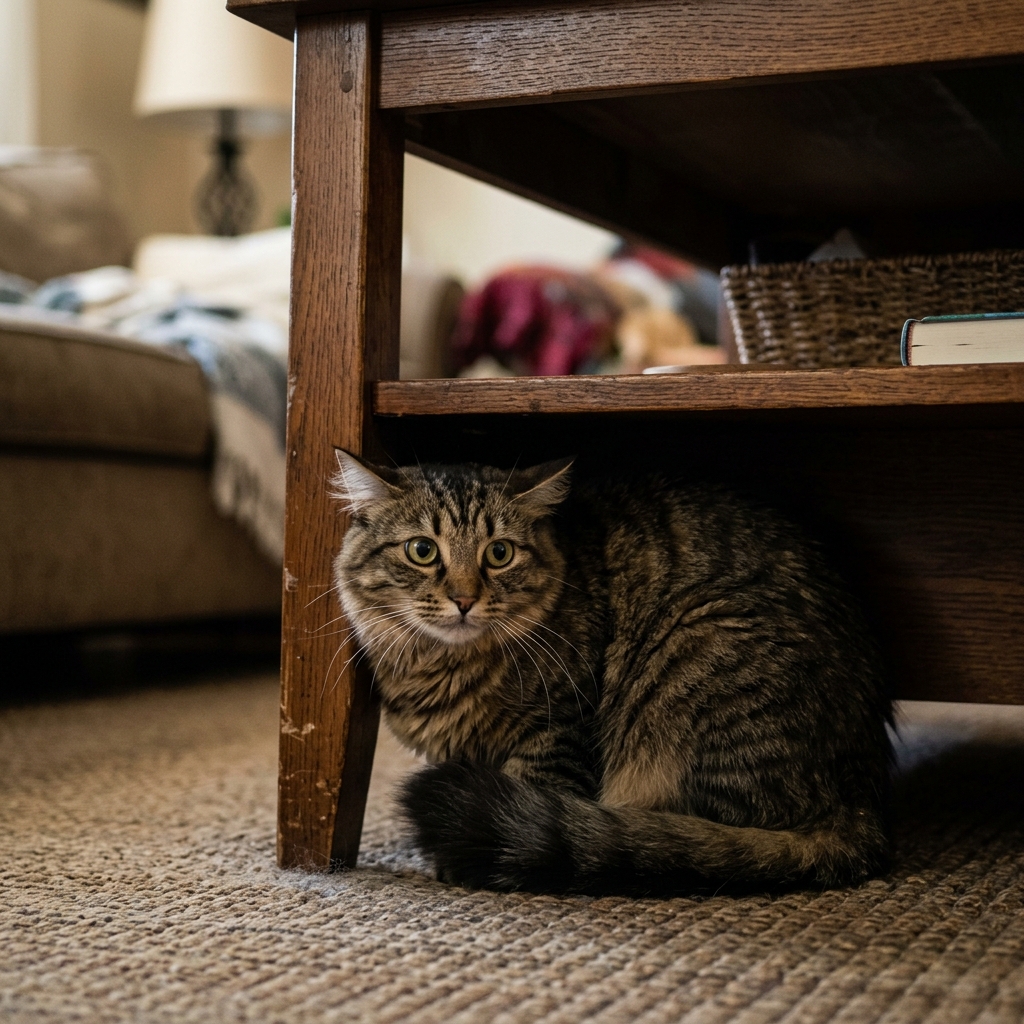
Cats are experts at hiding discomfort. Stress in cats rarely looks dramatic — it's usually quiet, easy to miss, and often mistaken for "just how they are."
Cats evolved as both predator and prey, which means showing obvious weakness or distress was historically a survival risk. The result is a species that's remarkably good at masking discomfort — which makes recognising stress in a cat genuinely harder than it is in a dog. A cat can be quietly struggling for weeks before the signs become obvious enough for most owners to notice.
This guide covers the subtle signs first, since those are the ones most commonly missed, and the more obvious behavioural ones after — including one sign that's especially important to understand correctly, because it's often confused with a medical issue rather than stress.
Worth knowing: Stress in cats isn't "being difficult" or "acting out." It's a genuine physiological response, and chronic, unaddressed stress is linked to real health issues — including bladder problems — not just behavioural ones.
The Subtle Signs — Body Language
These are the ones owners most often miss, because they're brief, quiet, and easy to mistake for a cat simply resting or being aloof.
Flattened or Sideways-Turned Ears
Ears rotated to the side or pressed flat against the head are one of the clearest stress indicators in cats, often visible before any other sign appears. This is distinct from ears that are simply relaxed and forward — flattened ears tend to accompany a generally tense body.
Dilated Pupils in Normal Lighting
Pupils that stay wide and round even in well-lit conditions, rather than narrowing to the expected slit shape, often indicate a heightened stress response. This is easy to miss since it requires actually looking closely at a cat's eyes rather than their overall posture.
A Low, Swishing, or Thumping Tail
A tail held low and tucked close to the body, or one that twitches and thumps rapidly while a cat is otherwise still, signals discomfort or agitation. This is a different signal from the slow, gentle tail movement of a relaxed, content cat — speed and tension are the key details.
A Crouched, "Loaf" Posture With Tension
A cat tucked into a tight, compact crouch with tense muscles — different from the loose, relaxed loaf shape of a comfortable cat — is making themselves smaller and less noticeable. Watch for stillness combined with visible muscle tension, rather than the soft, settled stillness of actual rest.
The More Obvious Signs — Behaviour
These tend to get noticed faster, mainly because they're disruptive or hard to ignore — but the first one especially is often misread.
Litter Box Avoidance or Accidents Outside It
This is one of the most common and most telling stress signs in cats — but it's also the one most likely to be mistaken for purely a behavioural problem when it can equally be a medical one. Stress genuinely can cause a cat to avoid the litter box, especially after a change in routine, a new pet, or a recently moved box. But urinary tract infections, bladder stones, and a stress-related bladder condition called feline idiopathic cystitis can all look identical from the outside.
Because of this overlap, any new litter box avoidance deserves a vet visit first to rule out a medical cause, before assuming it's purely stress-driven. Treating it as "just stress" when it's actually a UTI delays real treatment your cat needs.
Overgrooming or Bald Patches
Excessive licking, particularly on the belly, inner legs, or flank, to the point of thinning fur or visible bald patches, is a common way cats redirect stress inward. This is sometimes called psychogenic alopecia, and it's worth distinguishing from a flea allergy or skin condition, since the underlying cause changes the right treatment.
Increased Hiding or Withdrawal
A noticeable increase in time spent hiding, away from previously normal social spots in the house, beyond what's typical for that individual cat, often signals ongoing stress rather than simple preference. The key word is "increased" — comparing against your cat's own usual baseline matters more than comparing to cats in general.
Appetite Changes
Both a sudden drop in appetite and, less commonly, stress-driven overeating can occur. A cat who goes more than 24 hours without eating anything needs a vet visit regardless of the suspected cause, since prolonged not-eating carries its own serious health risk for cats specifically.
Increased Irritability or Aggression
A normally tolerant cat who starts swatting, hissing, or growling more readily — especially during handling that was previously fine — is often communicating that their stress threshold has dropped. This is frequently the cat's way of asking for more space, not a sudden personality change.
When stress signs appear suddenly: A cat who develops stress-like behaviour abruptly, especially litter box changes or sudden aggression, may be dealing with an underlying medical issue rather than purely emotional stress. Pain, urinary problems, thyroid imbalances, and cognitive changes in older cats can all present as stress-like symptoms. Sudden-onset changes are worth a vet visit before settling on stress as the explanation.
What You Can Do at Home
None of this replaces a vet visit for sudden or severe changes, but these genuinely help reduce everyday stress.
- Keep a predictable routine. Consistent feeding times and minimal sudden furniture or layout changes reduce a major source of background stress.
- Give them vertical and hidden retreat spaces. Cat trees, shelves, or simply a box they can disappear into give a sense of control over their environment.
- Keep the litter box clean, private, and unchanged. One box per cat plus one extra is the general rule, placed somewhere quiet and away from food.
- Introduce changes gradually. New pets, people, or furniture introduced slowly, with the cat's space respected, tend to cause far less disruption than abrupt changes.
- Don't wait too long to get help. For litter box issues, aggression, or persistent withdrawal, a vet visit first and a certified behaviourist after rule-outs gets to the real cause faster than guessing at home.
Frequently Asked Questions
The questions cat owners ask most about stress in their pets.
My cat suddenly stopped using the litter box. Is this stress or something medical?
It can genuinely be either, and they can look identical from the outside — which is exactly why this needs a vet visit rather than a guess. Stress-related litter box avoidance often follows an identifiable change: a new pet, moved furniture, a recently relocated box, or a household disruption. Medical causes like a urinary tract infection, bladder stones, or feline idiopathic cystitis — a stress-linked bladder condition that still needs medical management — can cause the exact same avoidance with no obvious trigger at all. Because untreated urinary issues can become serious quickly in cats, the safest approach is always ruling out a medical cause first, even if you suspect stress is the likely explanation.
How is normal cat aloofness different from actual stress?
The key is comparing against your specific cat's own normal baseline, not cats in general. A cat who's always been independent and prefers solo time isn't necessarily stressed — that's simply their personality. Genuine stress usually shows as a noticeable *change* from that baseline: more hiding than usual, new irritability during previously tolerated handling, or a shift in eating or litter habits. If you're noticing a pattern of change rather than a consistent personality trait, that's the signal worth paying attention to.
Can introducing a new pet cause long-term stress in my cat?
It can, particularly if the introduction happens too quickly. Cats are territorial, and a new pet — even a friendly one — represents a genuine disruption to their sense of security. A slow, gradual introduction using separate spaces initially, scent swapping before face-to-face meetings, and supervised short interactions tends to produce far less lasting stress than putting two animals together immediately. Some tension during the adjustment period is normal and usually settles within a few weeks; ongoing hiding, appetite changes, or litter box issues beyond that window suggest the introduction may need to be slowed down and restarted more gradually.
Is overgrooming always a sign of stress, or could it be something else?
Stress is one common cause, but it's not the only one — fleas, allergies, skin infections, and pain in a specific area (a cat will often overgroom near a site that hurts) can all produce similar overgrooming patterns. The location matters: stress-related overgrooming often appears on the belly and inner legs, while pain-related grooming tends to concentrate near the specific affected area. Because the underlying causes need different treatments, it's worth a vet visit to rule out a physical cause before assuming stress is the explanation, especially if bald patches or irritated skin have developed.
Do indoor cats get stressed even without obvious changes in their environment?
Yes — indoor cats can experience stress from sources that are easy to overlook precisely because nothing seems to have changed. Boredom and lack of mental stimulation, conflict with another cat in the household that isn't obviously aggressive, outdoor cats visible through a window triggering territorial stress, or even a litter box that's slightly less clean than the cat prefers can all be ongoing, low-grade stressors. If a cat is showing stress signs with no obvious recent trigger, it's worth considering these quieter, easy-to-miss sources rather than assuming nothing could be causing it.
Gully Tails Editorial
The Gully Tails team brings you expert-reviewed guides and practical advice for pet parents in India.