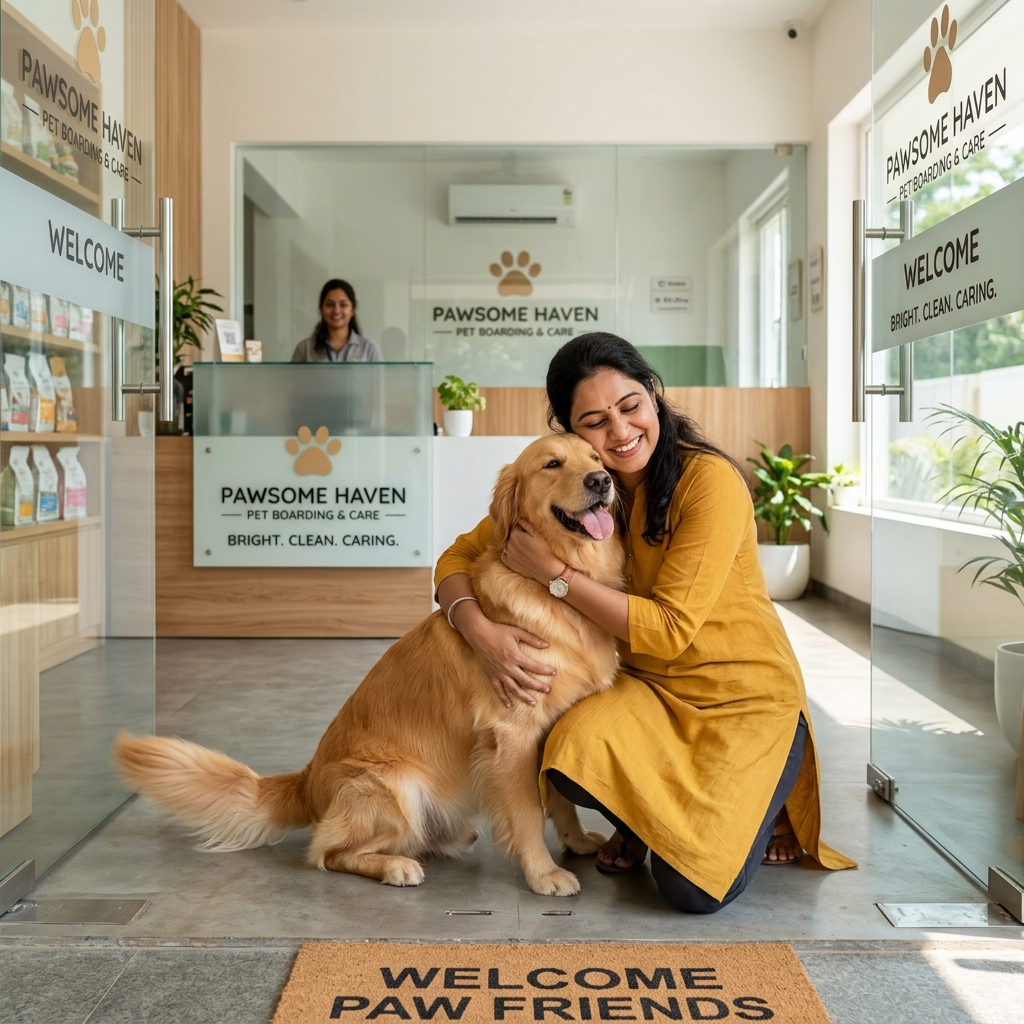
First boarding stay sorted. A warm, practical guide for Indian dog parents — from choosing the right facility to the drop-off moment.
The first time you board your dog is as nerve-wracking for you as it is unfamiliar for them. Will they eat? Will they settle? Will the staff actually care? These are reasonable questions — and the good news is that a well-prepared first boarding stay almost always goes better than expected. The key word is <em>prepared</em>.
This guide walks you through everything — choosing the right facility, getting your dog ready, what to pack, and how to handle drop-off without making it harder than it needs to be.
“Dogs don't dread boarding. They dread the unknown. The more familiar the environment and routine, the faster they settle.”
1. Start at least 2–3 weeks before your travel date
Last-minute boarding bookings are stressful for everyone — and they don't leave room for the preparation that makes a first stay go well. Here's the ideal timeline:
2. How to choose the right boarding facility
Not all pet boarding facilities in India are equal. A personal visit before booking is non-negotiable. Here's what to look for when you get there:
- Clean, odour-managed spaces — Some smell is inevitable; overwhelming ammonia or faecal odour is not. Cleanliness reflects daily management standards.
- Secure, appropriately sized enclosures — Enough space for your dog to stand, turn, and lie comfortably. Check that latches are dog-proof.
- 24/7 human supervision — Not just cameras. Ask whether staff are on-premises overnight, especially for first-time boarders.
- Clear staff-to-dog ratio — A good facility knows this number and tells you without hesitation. Overcrowded kennels mean less individual attention.
- Daily exercise and outdoor time — At minimum, twice-daily walks or play sessions. Ask exactly how long and in what setting.
- Emergency vet access — Which clinic do they call? How quickly can they reach it? This matters.
- Regular owner updates — Photo or message updates once or twice a day are a reasonable expectation at a good facility.
Tip: Pay attention to how the staff interact with the dogs already in their care during your visit — not just how they speak to you. A genuinely dog-focused team will be managing, reassuring, and engaging the dogs, not just walking past enclosures.
3. Vaccination and health requirements
Most reputable boarding facilities in India will not accept a dog without proof of current vaccination. Don't leave this to the last minute — some vaccines require a gap of 7–10 days between administration and boarding to be effective.
- DHPPiL — Core combination vaccine. Must be current, not lapsed.
- Rabies — Legally mandated in India. Nearly all facilities require this.
- Bordetella (Kennel Cough) — Strongly recommended before any boarding stay. Kennel cough spreads rapidly in group settings.
- Deworming record — Some facilities ask for a recent deworming certificate. Check in advance.
- Recent flea/tick treatment — Many facilities require this to protect the wider group of dogs in their care.
⚠ Timing matters: Book your vet appointment at least 2 weeks before the boarding date if any vaccinations are due. A kennel cough vaccine given 2 days before drop-off offers little protection. Plan ahead.
4. What to pack — the complete boarding bag
Familiarity is comfort. The more your dog's environment at the boarding facility resembles home, the faster they settle. Pack thoughtfully:
5. Questions to ask before you leave your dog
6. Dogs with separation anxiety — extra steps
A dog with separation anxiety needs a little more groundwork, but boarding is still very manageable with the right approach.
- Consult your vet before the stay — a short-term anxiety management plan may help significantly
- Choose a facility with a lower dog-to-staff ratio and experienced handlers
- Do multiple short visits to the facility before the actual stay — familiarise without pressure
- Leave a worn t-shirt or item with your scent — research supports this as genuinely calming
- Brief, matter-of-fact drop-off — drawn-out goodbyes extend and deepen anxiety, not reduce it
Good to know: Most dogs with separation anxiety settle within 2–4 hours of a calm drop-off at a well-run facility. Staff experienced with anxious dogs know how to redirect and reassure — ask them specifically about their approach before booking.
7. Red flags in a boarding facility
Refusing a facility visit before booking — A reputable boarding facility welcomes walk-in visits. Resistance to being seen is a serious warning sign.
No vaccination requirements — A facility that accepts unvaccinated dogs puts every dog in their care at risk, including yours.
Vague or evasive answers about staffing — "Someone is always around" is not an answer. Press for specifics on overnight supervision.
Dogs that look distressed or unengaged during your visit — Not all dogs will be playful, but widespread lethargy, cowering, or visible anxiety in resident dogs is a signal.
No clear emergency protocol — If they can't tell you which vet they use and how quickly they'd call them, move on.
8. Your complete boarding prep checklist
- Facility personally visited and chosen at least 2–3 weeks before travel
- Vaccinations confirmed current — DHPPiL, Rabies, Bordetella
- Recent deworming and flea/tick treatment done
- Trial overnight stay completed before the main booking
- Food packed — regular brand, enough for the full stay plus extra
- Familiar bed, blanket, and a toy packed
- Medications packed with written instructions
- Vaccination records, emergency contacts, and vet number provided to facility
- Written feeding routine and any quirks shared with staff
- Drop-off plan — brief, calm, confident
The first boarding stay is almost always the hardest one — for the owner. Most dogs adapt faster than expected when the facility is the right fit and the preparation has been done. Find a place you trust, do the trial stay, and leave confidently. Your dog picks up on your energy more than you realise.
Frequently asked questions
Everything Indian dog parents ask about first-time boarding stays.
How do I prepare my dog for their first boarding stay?
Start preparation at least 2–3 weeks before the stay. Ensure vaccinations are current, visit the facility in person, do a one-night trial stay before the main booking, pack familiar items like a bed or blanket, maintain your dog's regular feeding schedule, and keep drop-off brief and calm. The trial stay is the single most effective preparation step.
What vaccinations does my dog need before boarding in India?
Most boarding facilities in India require proof of current DHPPiL (Distemper, Hepatitis, Parvovirus, Parainfluenza, Leptospirosis), Rabies, and Bordetella (kennel cough) vaccination. Some also require a recent deworming record and flea/tick treatment. Confirm exact requirements with your chosen facility at least 2 weeks before your travel date.
How do I choose a good dog boarding facility in India?
Visit in person before booking — never book a facility you haven't seen. Look for clean, well-ventilated spaces, secure enclosures, 24/7 supervision, a clear staff-to-dog ratio, daily exercise time, and emergency vet access. Ask how they handle a dog that isn't settling. <a href="https://gullytails.com/listings?category=Pet+Boarding" target="_blank" rel="noopener" class="text-primary hover:underline">Find verified boarding facilities near you on Gully Tails →</a>
What should I pack for my dog's boarding stay?
Pack your dog's regular food (enough for the full stay plus extra), a familiar bed or blanket, a favourite toy, any medications with written dosage instructions, vaccination records, your vet's contact number, an alternate emergency contact, and a written note covering feeding times, portions, and any quirks. Avoid packing irreplaceable items.
Will my dog be okay at boarding for the first time?
Most dogs adjust well with preparation. A trial overnight stay before the main booking is the most effective way to set your dog up for a calm experience. Dogs also take strong cues from their owners at drop-off — a brief, matter-of-fact goodbye makes a genuine difference. Staff at a good facility are experienced with first-timers and will contact you if your dog is not eating or settling.
How long should a dog's first boarding stay be?
For a first stay, a one or two night trial is strongly recommended before a longer booking. This lets your dog experience the environment and learn that you return — without the pressure of a longer absence. If the trial goes smoothly, longer stays are much more likely to follow suit.
My dog has separation anxiety — can they still be boarded?
Yes, with extra preparation. Consult your vet before the stay — they may recommend a short-term anxiety management plan. Choose a facility with a lower dog-to-staff ratio and experienced handlers. A worn item with your scent, multiple short pre-stay visits to the facility, and a calm, brief drop-off all help significantly. Avoid drawn-out goodbyes — they increase rather than reduce anxiety.
What should I ask a boarding facility before leaving my dog?
Ask about the daily routine and exercise schedule, whether dog interactions are supervised or free-roaming, how they handle a dog that isn't eating or settling, overnight staffing, emergency vet access, and how they communicate updates to owners. Any well-run facility will answer these confidently and in detail.
Gully Tails Editorial
The Gully Tails team brings you expert-reviewed guides and practical advice for pet parents in India.